Sands of Saqqara: A Platformer Built on a Real Egyptian Tale
Sands of Saqqara is a free flip-screen platformer in C, set in a lost Egyptian tomb. Most of the time making it went into archaeology and Egyptian history.
My new game is out: Sands of Saqqara, a flip-screen platform adventure through a lost Egyptian tomb, in the spirit of the 8-bit classics. Like Chuck and Breakup, it is written in C with SDL3 — but this time, most of the work on it wasn't code at all.
Sands of Saqqara is free and playable right in your browser on itch.io. It also runs on Windows, macOS and Linux, with a keyboard or any gamepad.
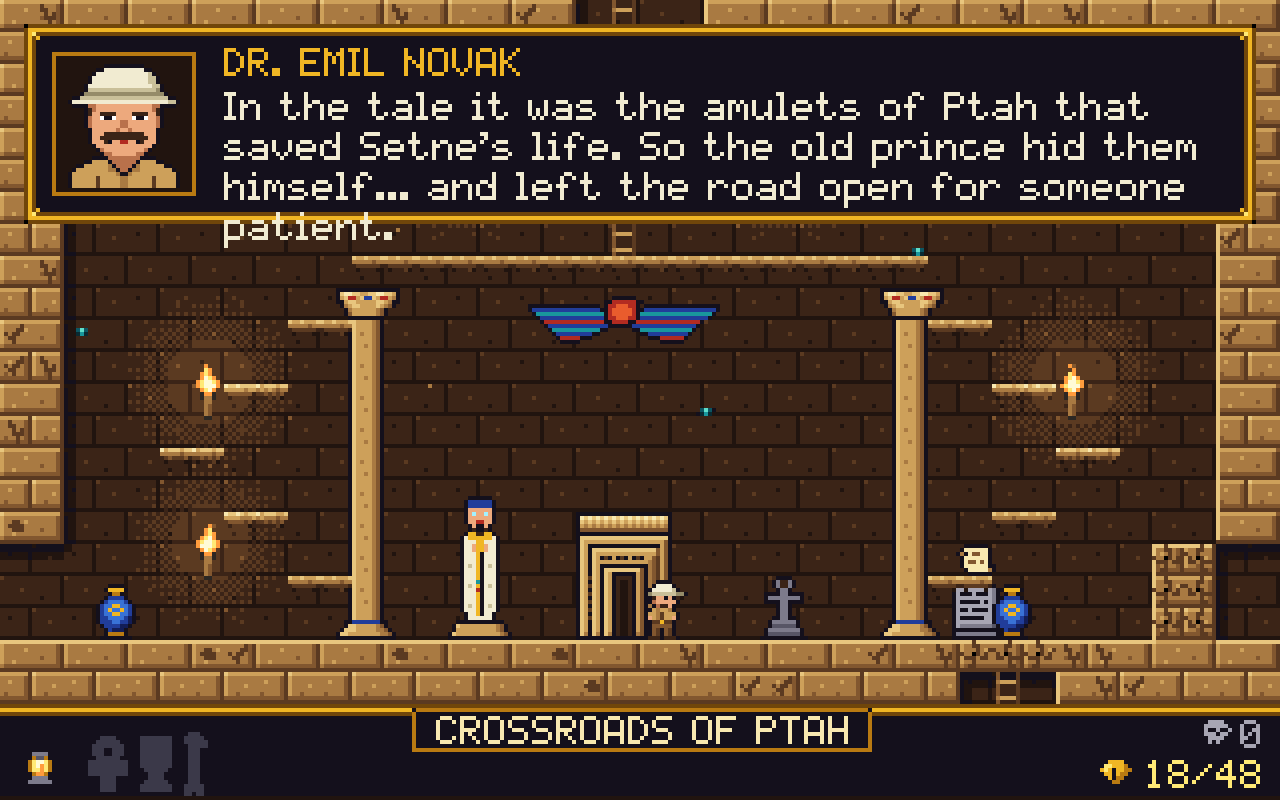
Saqqara, Spring 1926
Dr. Emil Novak, an archaeologist from Prague, has spent his last savings on a hunch. He believes an old Egyptian ghost story is really a map. The tale tells of a prince who stole the Book of Thoth, was ruined by it, and in the end carried it back into the tomb of the dead man it belonged to. Scholars call it a fairy tale. Emil has noticed that every landmark in it stands at Saqqara, the great necropolis of ancient Memphis.
The game begins on the morning his workmen strike dressed stone. From there it's just you, a pith helmet, and no idea what is behind the next wall.
One Big Map of Named Chambers
"Flip-screen" means the camera never scrolls. Each screen is one room, and when you walk off its edge, the next one takes its place — just like in the 8-bit adventures the game is a tribute to. Sands of Saqqara has 49 of these chambers, every one with its own name, and they join edge to edge into one big map: the desert above, a sealed mastaba, the catacombs of the sacred ibises, the Serapeum of the Apis bulls, flooded halls, the night road of the sun, and finally a tomb nobody has found.
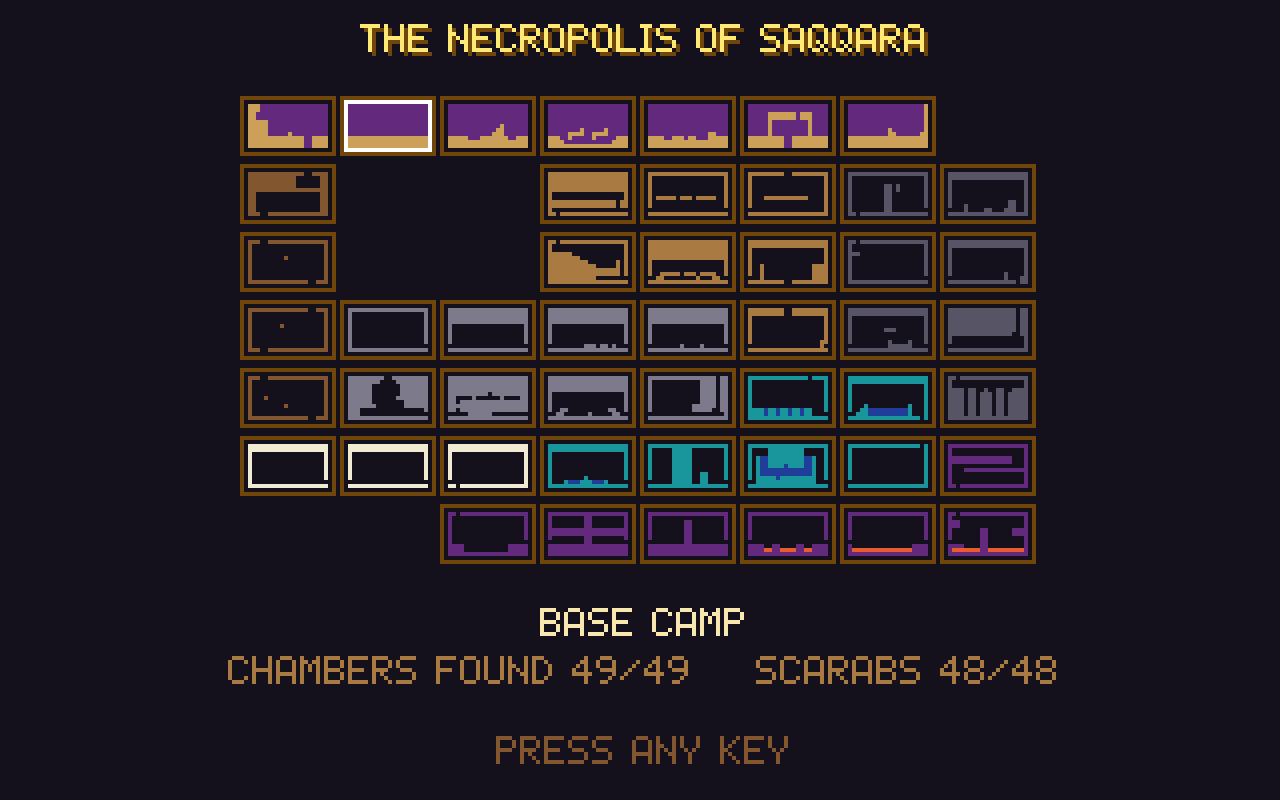
The journey is split into eight chapters, and each of them adds its own rules:
- The khamsin wind and quicksand
- Rolling stones and sand clocks
- Darkness, and a lamp to see by
- A bull you cannot fight, only outwit
- Tides, crocodiles and a breath you have to hold
- A feather that lets you glide on warm air
- Scales that weigh you
- A serpent that will not stay dead
And after all of that, the way out.
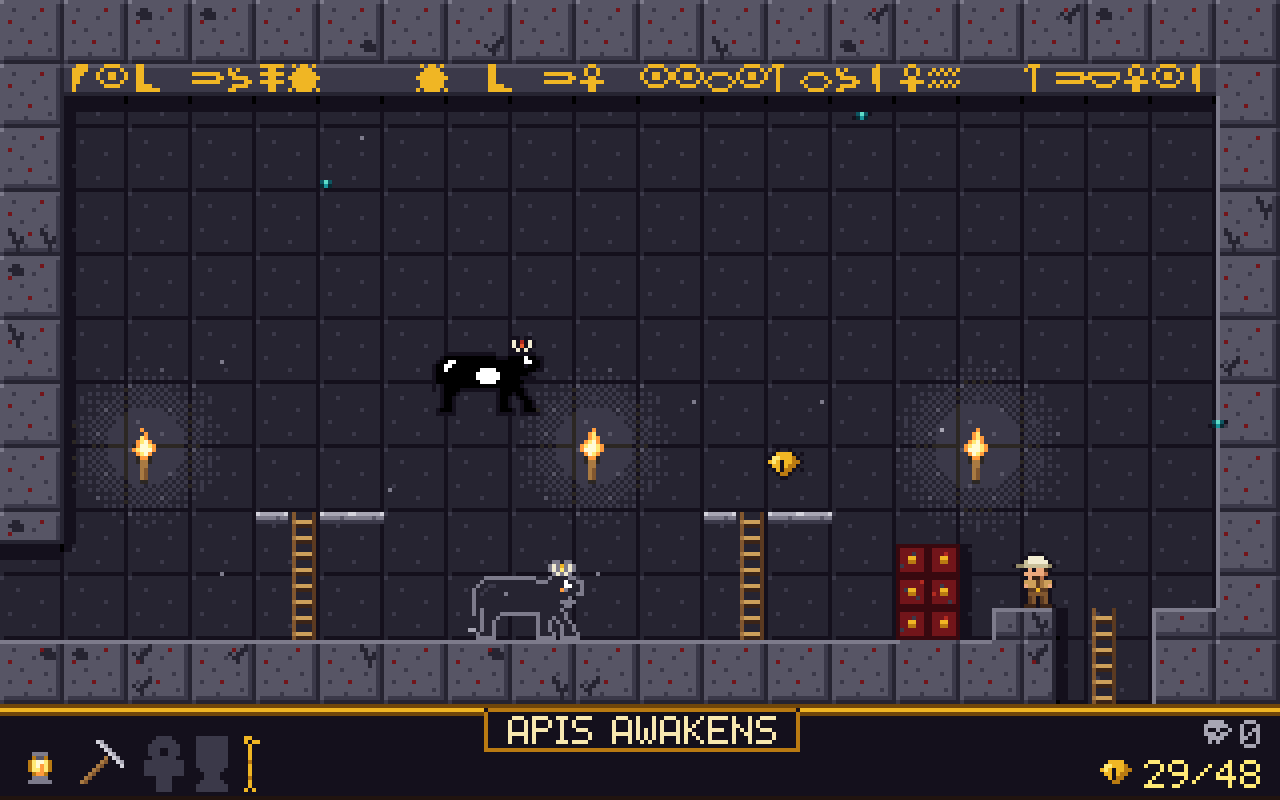
Along the way you find tools that open up parts of the map you couldn't reach before: the Undying Lamp, a tomb robber's pickaxe, the Feather of Maat and the three amulets of Ptah. Off the safe path lie 48 golden scarabs for those who want to find everything. And it is a complete game, with an intro, a story told in dialogue, two boss chambers, an ending and, at the very end, a rank from the Antiquities Service.
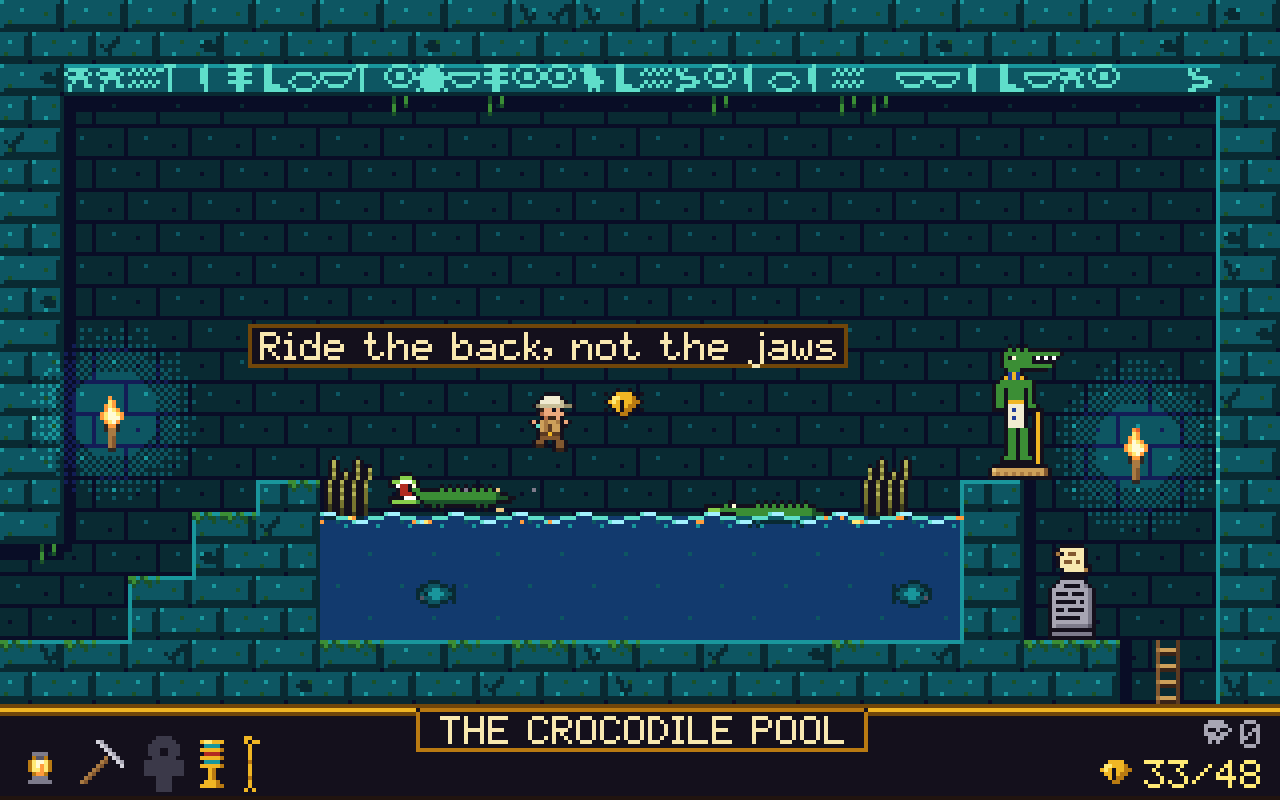
There are two ways to play. In Explorer mode you have unlimited tries. In Classic mode you have five lives, and losing all of them sends you back to the start of the chapter. Either way, the game saves by itself at every safe foothold and at the ankh shrines.
Most of the Time Went Into Egyptology
Here is the fun fact about this game: the thing I spent the most time on wasn't code, pixel art or music. It was research — reading about archaeological finds and Egyptian history. And the deeper I went, the more of the game turned out to be true.
The story is real. The ghost story Emil chases exists. It is called Setne Khamwas and Naneferkaptah, it was written in demotic Egyptian in the Ptolemaic age, more than two thousand years ago, and its best copy is Papyrus Cairo 30646. In it, Prince Naneferkaptah wins the Book of Thoth from a serpent that cannot die, loses his wife Ahwere and his son Merib to the god's anger, and is buried with the book. Generations later, Prince Setne steals it from the tomb by playing draughts against the ghost, comes to grief, and carries the book back with a forked stick in his hand and a lighted brazier on his head.
Setne was a real man, too. He is a memory of Khaemwaset, the fourth son of Ramesses II and high priest of Ptah at Memphis. Khaemwaset restored the pyramids of his ancestors and labelled them with inscriptions naming their owners, which is why he is often called the first Egyptologist. There's a nice symmetry in that: a game about an archaeologist from 1926 follows a story whose hero was, in a way, an archaeologist himself, more than three thousand years earlier.
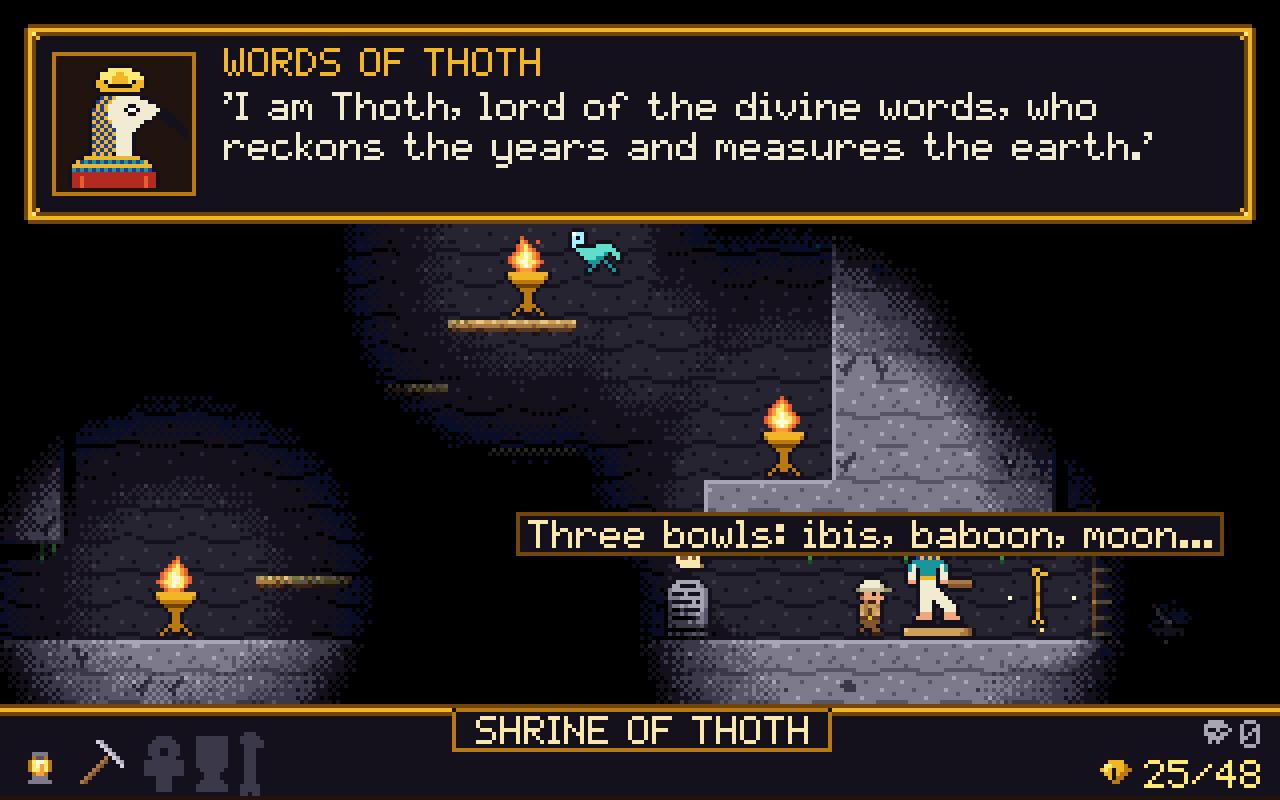
The places are real, and you can visit them. The Step Pyramid of Djoser stands above the necropolis. The Serapeum, where the sacred Apis bulls were buried in granite coffins weighing some seventy tons, is open to visitors. And the galleries under Saqqara hold millions of mummified ibises, the birds of Thoth — the same Thoth whose book everyone in the story wants.
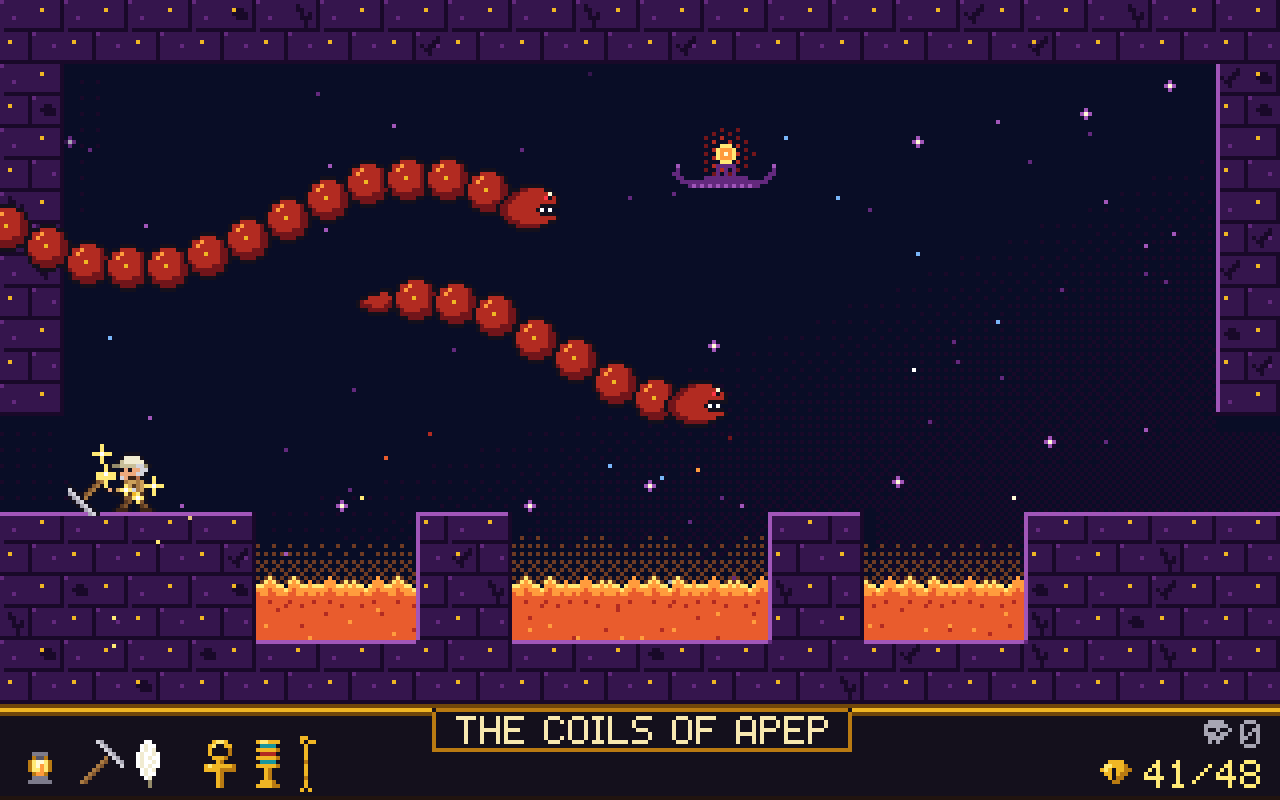
Egyptian beliefs about the afterlife shaped the later chapters as well. The feather and the scales come from the weighing of the heart, where the heart of the dead was weighed against the feather of Maat. And the night road of the sun is the route the sun god's boat takes through the underworld every night, with the serpent Apep waiting along the way to swallow it.
I didn't want all that reading to stay hidden behind the levels, so it went into the game. There are 26 field notes of real Egyptology written on the stelae throughout the tomb, and you can read every one of them. You don't have to — but my first piece of advice to anyone who plays is: read the stelae.
So how much of the game is true? The tomb of Naneferkaptah has never been found. Everything else is invented. Probably.
320 × 200 Pixels and 64 Colours
Technically, Sands of Saqqara goes back to the era it pays tribute to. It runs at 320 × 200 pixels, the classic resolution of DOS-era games, with a palette of 64 colours. Every pixel of the art was placed by hand, and the music and sound effects are computed by a small chip synthesiser instead of being recorded.
Just like Chuck, the whole game is one small program with no data files at all: the chambers, the pixel art and the music all live inside it. The downloads for Windows, macOS and Linux are around 2 MB each, and the browser version — the same C code compiled to WebAssembly — is about 1.4 MB. Your progress is kept in the browser, so you can close the tab and come back later.
Play Sands of Saqqara
The game is free. In the browser, there's nothing to install: start it, click it once so it hears the keys, and play with a keyboard or a gamepad. The downloadable versions for Windows, macOS and Linux are name your own price on itch.io, so they can be free as well. The game is in English, and the whole adventure takes a few hours.
A few words of advice, without spoiling anything: read the stelae; when the wind howls, crouch; the lamp is in the mastaba, and you will want it before the galleries; and remember that nobody ever outran a bull in a straight line.
I'd be really happy if you gave Sands of Saqqara a try on itch.io — and if you find all 48 scarabs, let me know what rank the Antiquities Service gave you.
Final Thoughts
Sands of Saqqara started as a platformer in the spirit of the 8-bit classics, and ended up being just as much a project about archaeology. Most of my time went into reading about excavations, papyri, Apis bulls and ibis catacombs, and a good part of it made its way into the game: into its chambers, its chapters and the notes on its stelae.
The best stories for a game, it turns out, don't always have to be invented. Sometimes they have been sitting in a museum in Cairo for more than a century — you only have to read them.
Thank you for reading, and mind the bull!
Follow along
New posts about small software, games and the web. Subscribe via RSS or follow @RobertLibsansky on X.